

Reading Activity
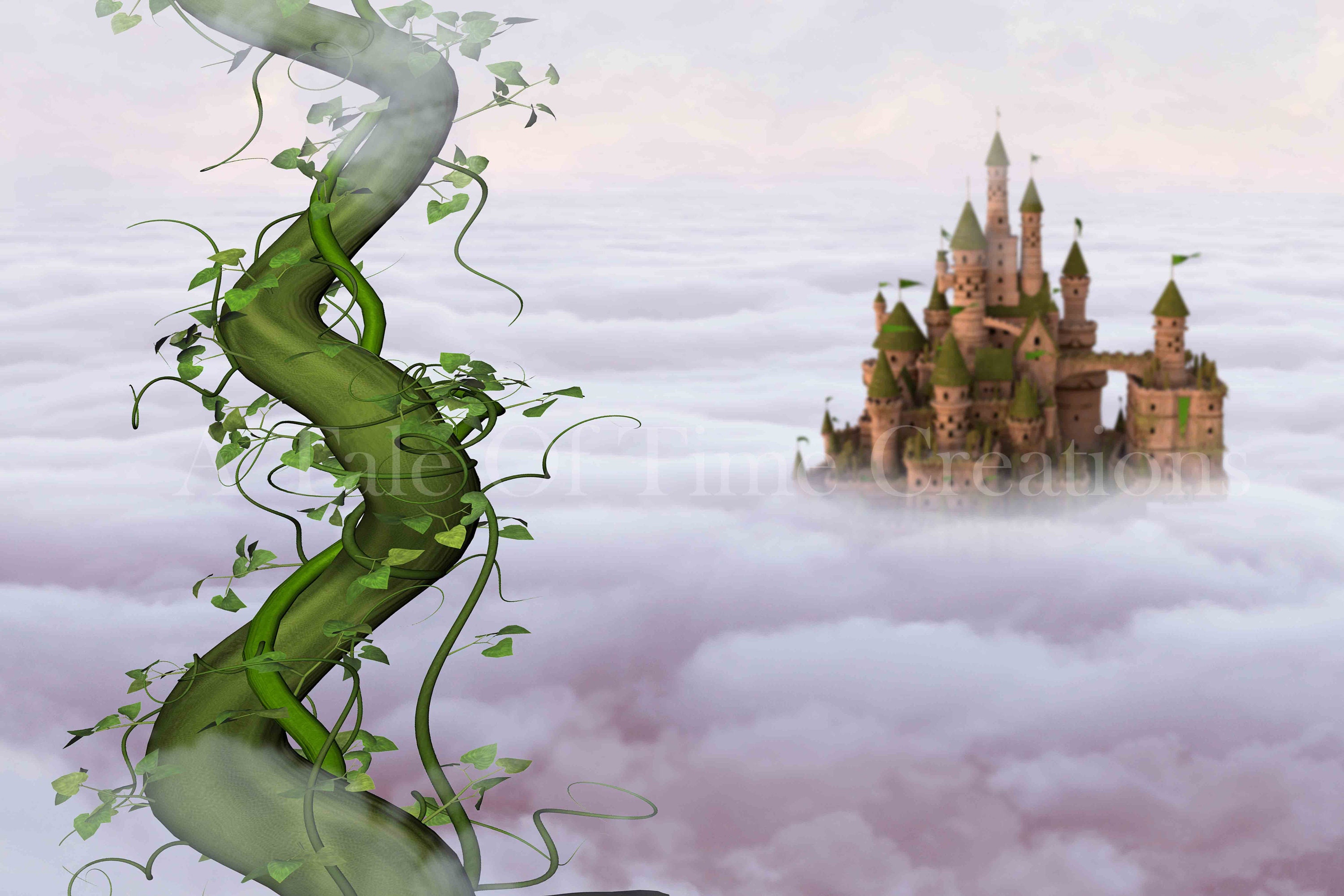
This week, we are exploring the fairy tale 'Jack and the Beanstalk'. Read the story below together .
Can you retell the story using actions?
- Jack climbs the beanstalk (climbing actions)
- The beanstalk grows (stretch tall)
- The giant stomps (loud steps)
Talk prompts:
- “How did the beanstalk change?”
- “How did Jack feel at the start? How did he feel at the end?”
Writing Activity
“Jack climbed all the way up the beanstalk…
But before he reached the giant’s castle, he saw something amazing!
What do you think it was?”
Task:
- Children draw what Jack might have seen at the top.
(A rainbow garden? A baby dragon? A cloud playground?) - Children write a label or a simple sentence about their picture:
- a dragon
- a big cloud
- Jack sees a castle.
- I see a gold hen.
Maths Activity
Use toys, blocks, or household items.
- Make a tiny pile of items and a giant pile.
- Ask your child to:
- Count each pile.
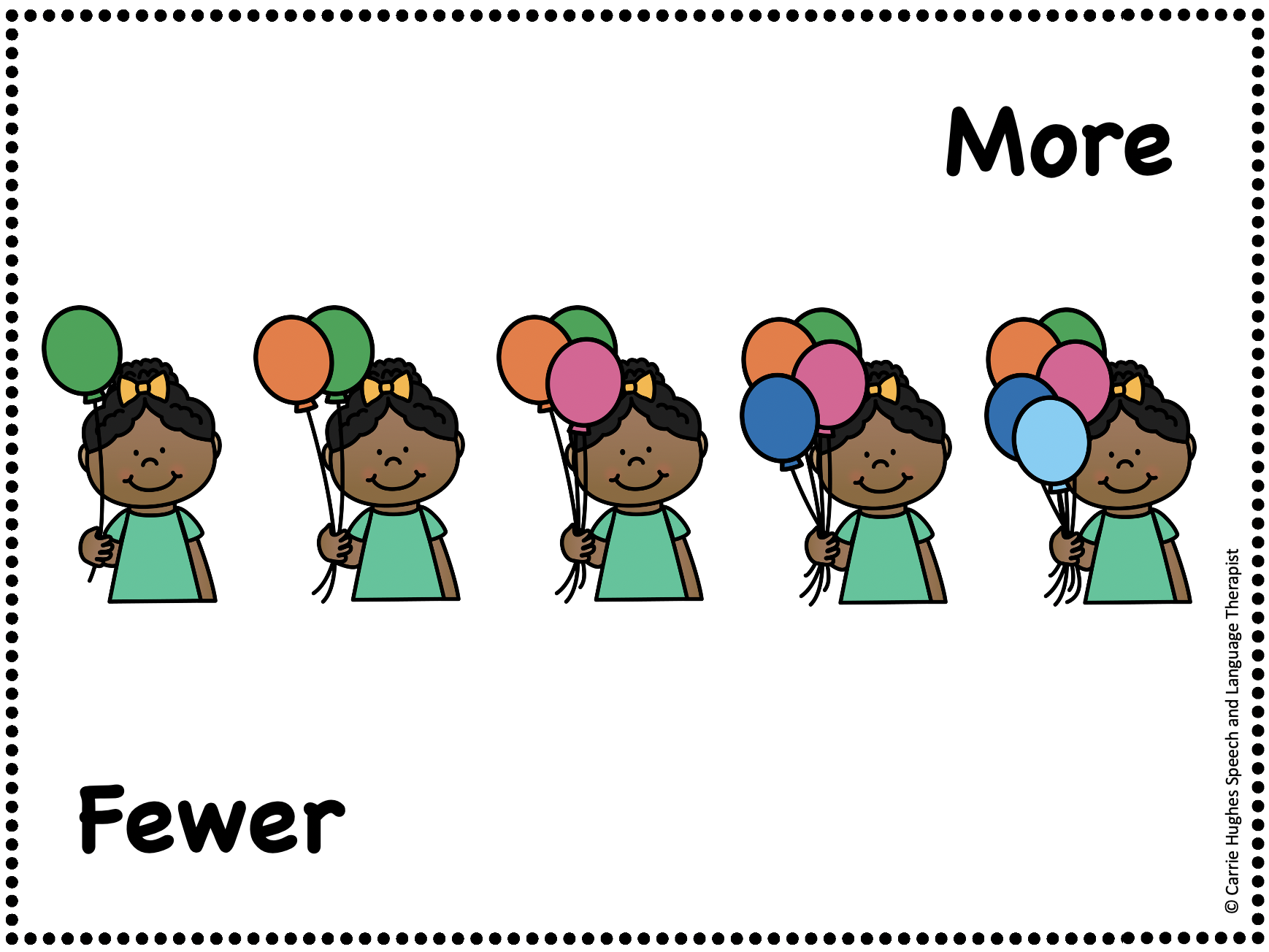
- Say which has more and which has fewer.
- “If the tiny pile grows, what happens?”
Growing and Changing
- Can you draw a picture of yourself now?
- Then, draw yourself as a grown‑up (on the same page or another piece of paper). Think about what do you want to be when you are older?
- Can you write a simple sentence about each picture:
- I am 5.
- I will be big.
- I can run.
Make a “Growing” Nature Artwork
- Collect natural items from the garden or on a short walk (leaves, sticks, stones).
- Ask your child to create a picture showing something growing — a flower, tree, or creature.
- They can arrange the items on the floor/table (no glue needed!).
Talk prompts:
- “What did your plant/creature look like at the start?”
- “How did it change?”

Welcome to Reception's Class Page
Class Teacher: Miss Mochan
LSA: Mrs O'Neill

Key Information
We kindly ask that all children bring their reading bags to school every day. This means that we can enjoy regular reading together.
Wednesday - Children come to school in P.E. Kit.
Please ensure that your child brings in a water bottle that is clearly named. This must be filled with water.
Don't forget to check that all uniform is clearly named.
Our Class Saint is Saint Paul.
Saint Paul is special because he loved Jesus very much and wanted everyone to know about God’s love.
He travelled to lots of places to tell people how to be kind, how to work together, and how to love others.
Even when things were hard, Saint Paul kept going and didn’t give up. He showed us that we can always try our best and help others every day.

Our values for this half term are Intentional and Prophetic.
At St Paul’s, our Reception children are learning to be intentional. This means helping children to understand that their actions matter.
We encourage them to:
Choose to be kind, helpful, and gentle
Think about how their choices affect others
Try to make our classroom a happy and caring place
Plan to do good, even in small ways
Being prophetic means showing God’s love by being a role model to others.
Children learn that they can spread kindness and fairness through their actions and words.
We encourage them to:
Stand up for what is right in age‑appropriate ways
Show others how to behave kindly
Notice when something is unkind and try to help
Lead by example, just like Jesus
Catholic Social Teaching: Option for the Poor and Vulnerable

We are learning that God wants everyone to have what they need —
food, clothes, a home, school, and help when they are poorly.
Some people have these things, but some people don’t.
Jesus asks us to be kind, share, and help others
so everyone can feel safe and cared for.

RE
Baptism
They explore important symbols such as water, a special name (Christian name), and the Baptismal candle, which reminds us that Jesus is our Light. The children enjoy simple role‑play of a Baptism and talk about how we are all part of God’s family.
Lent
During Lent, children learn that it is a special season of prayer and change. They discover that:
- Lent is a time to try to be more like Jesus.
- We think about our choices and try to make loving ones.
- We use our gifts and talents to help others.
- Lent is a time to pray, say sorry, and try again.
Holy Week
During Holy Week, children learn the key stories leading to Easter:
- Palm Sunday – Jesus is welcomed with palms.
- The Last Supper – Jesus shares a special meal with his friends.
- Good Friday – Jesus dies on the cross, showing his love for everyone.
Children explore these stories through simple role‑play, art and prayer.
Phonics
This half term in Reception, we are continuing our phonics journey using Essential Letters and Sounds (ELS), which is our school’s chosen phonics scheme. ELS provides a clear, systematic approach to teaching early reading and helps ensure all children learn to read confidently and quickly.
The children have already made a fantastic start, and Spring 2 is all about learning new sounds, blending them together, and becoming more confident early readers. Children will be introduced to the next set of Phase 3 sounds. These include new digraphs (two letters making one sound) and some trigraphs later in the term.
Reading
As the Reception year progresses and children become more confident in their phonics, they will begin to read books that are carefully matched to their phonic ability. This ensures they can apply the sounds they have learned and experience real success as early readers.
Children will read with an adult in school every week, giving them regular opportunities to practise their skills and develop fluency. Their reading books will be changed weekly, allowing them to enjoy a new text at home while continuing to revisit familiar books to build confidence.
We encourage families to read together as often as possible—little and often makes a big difference!
Literacy
This half term, our learning will be centred around the traditional tale Jack and the Beanstalk. Children will explore the story through puppets, role‑play, small‑world areas, and repeated story retelling, helping them build confidence with sequencing events and using key story language.
In writing, children will focus on caption writing, using simple, meaningful labels such as “Jack climbs,” “big bean,” or “tall beanstalk.” These activities support early sentence building and encourage children to hear and record initial and final sounds. They will also take part in shared retelling sessions, where they create simple sentences about what happens in the story and talk about the characters, settings, and main events.
Later in the term, children will learn to write simple instructions on how to grow cress, using clear steps supported by pictures and key vocabulary. Through practical planting sessions, they will explore time words such as first, next, then, and finally, helping them understand how instructions work and why order is important.
Across all activities, children will continue developing their phonics knowledge, practising letter formation, and building the confidence to write independently with increasing accuracy.
Maths
Understanding of the World
Expressive Arts and Design
In Expressive Arts and Design, children will take part in creative activities linked to our core text Oi Frog! and our half‑term theme of animals. They will create artwork such as frog paintings, paper‑plate frogs, animal masks, and collages of woodland, hot and cold habitats. As part of our Chinese New Year learning, children will explore Chinese animals, dragon artwork and imaginative dance. Throughout the half term, children will use a range of materials, tools and techniques to express their ideas, supporting their creativity and fine motor development.
Music
In Music, children will develop their understanding of steady beat and pitch through clapping games, action songs and simple percussion. They will explore how music can be high, low, fast or slow, and will enjoy keeping a steady beat while joining in with songs linked to our animal themes and class stories.
PE
In PE, the focus will be on body management, helping children develop balance, control, coordination and spatial awareness. Through animal‑inspired movement, simple routines and obstacle activities, children will practise travelling in different ways, controlling their bodies safely, and moving with confidence.
Computing
Children will be learning to:
- Recognise and identify familiar letters and numbers on a keyboard.
- Develop basic mouse skills such as moving and clicking.
- Use a simple online paint tool to create digital art.
- Learn to log in and log out.


